Understand needs
Natural language processing can help interpret questions like where someone can pray, reflect, or find faith-respectful food nearby.
Faith Inclusive
Faith Inclusive helps people from different faith backgrounds find places that respect prayer, reflection, food needs, and belonging in everyday public life.
The challenge
Many students, travelers, employees, families, and community members have difficulty finding public spaces that accommodate spiritual and religious needs. This can include a quiet place to pray or reflect, halal or kosher food options, respectful facilities, or simply clear information before arriving.
When that information is hard to find, people can feel excluded from school, work, travel, and community life. Faith Inclusive is designed to reduce that stress by making inclusive options easier to locate and easier for communities to improve.
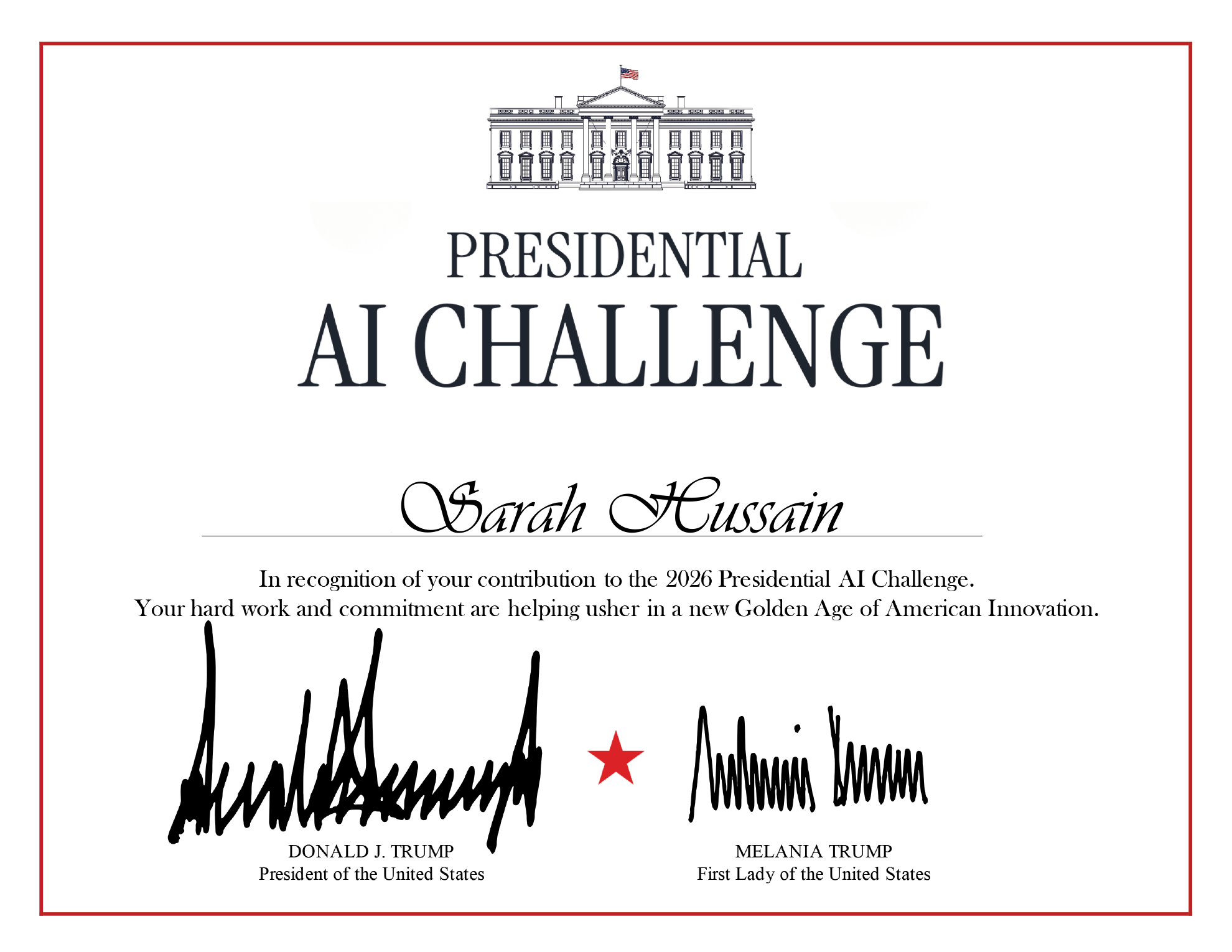
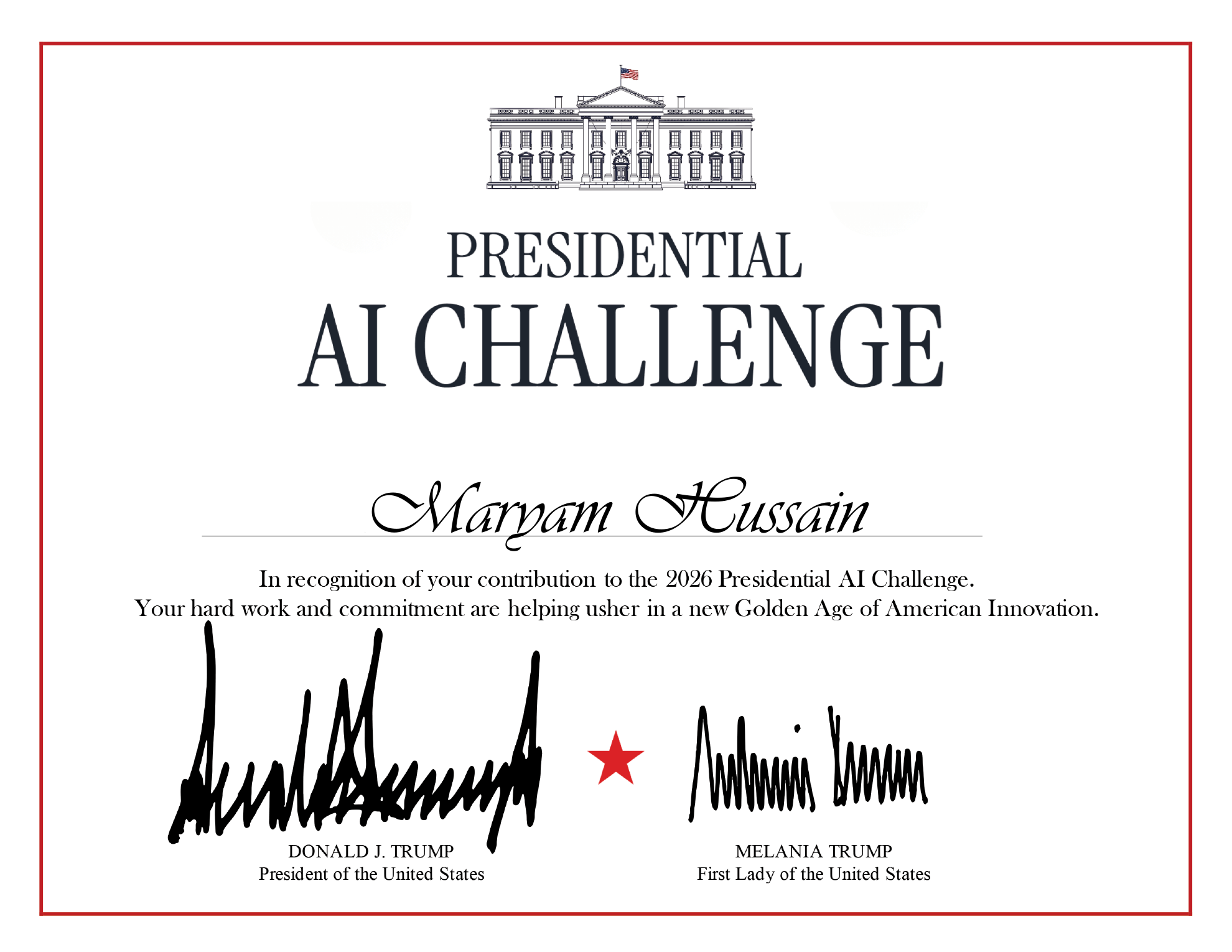
The project was created by Sarah Hussain and Maryam Hussain as a high school youth proposal for the Presidential AI Challenge, with Shadab Hussain serving as the supervising adult.
Responsible AI proposal
Faith Inclusive combines community knowledge with practical AI methods so people can discover spaces with more confidence.
Natural language processing can help interpret questions like where someone can pray, reflect, or find faith-respectful food nearby.
Geolocation tools can map inclusive public spaces, nearby facilities, and community-submitted details in a practical way.
Machine learning recommendations can improve over time through feedback while keeping transparency and human oversight central.

What makes it different
Unlike a standard directory, Faith Inclusive focuses specifically on faith-based inclusion. The concept adapts through community feedback and centers the practical details people need before they walk into a public place.
People can help surface details that may not appear in traditional maps or venue pages.
The proposal supports participation in school, work, travel, shopping, events, and community activities.
The idea can grow across different public spaces while remaining focused on dignity, access, and respect.
Ethical design
The proposal emphasizes privacy protection, bias mitigation, transparent recommendations, and human review of community-submitted information. That matters because inclusion tools should help people feel safer and more respected, not expose sensitive needs or create unfair recommendations.
Working on Faith Inclusive also helped the team understand how AI can be used for social good when it is designed with community engagement and responsibility from the beginning.
Recognition
HussAIneers received these certificates for participation in the 2026 Presidential AI Challenge.
Public space inclusion
HussAIneers welcomes conversations with venues, schools, workplaces, and community organizations interested in practical faith-inclusive accommodations.